What Is the Gmail Login Page?
The official Google login page is mail.google.com. This is where you log in to check your email, write new messages, organize your contacts, and follow all of Google's email capabilities. Another way to access the sign-in page is by going to accounts.google.com, which also requires access to Google Account authentication.
Gmail is not an independent service. It's included in your Google Account. You get access to Google Drive, YouTube, Google Photos, Google Maps, Google Pay, and all of Google's other products with the same email address and password. No login is required, only Gmail. Your credentials are valid throughout the entire Google platform.
Gmail Login: How to Access Gmail
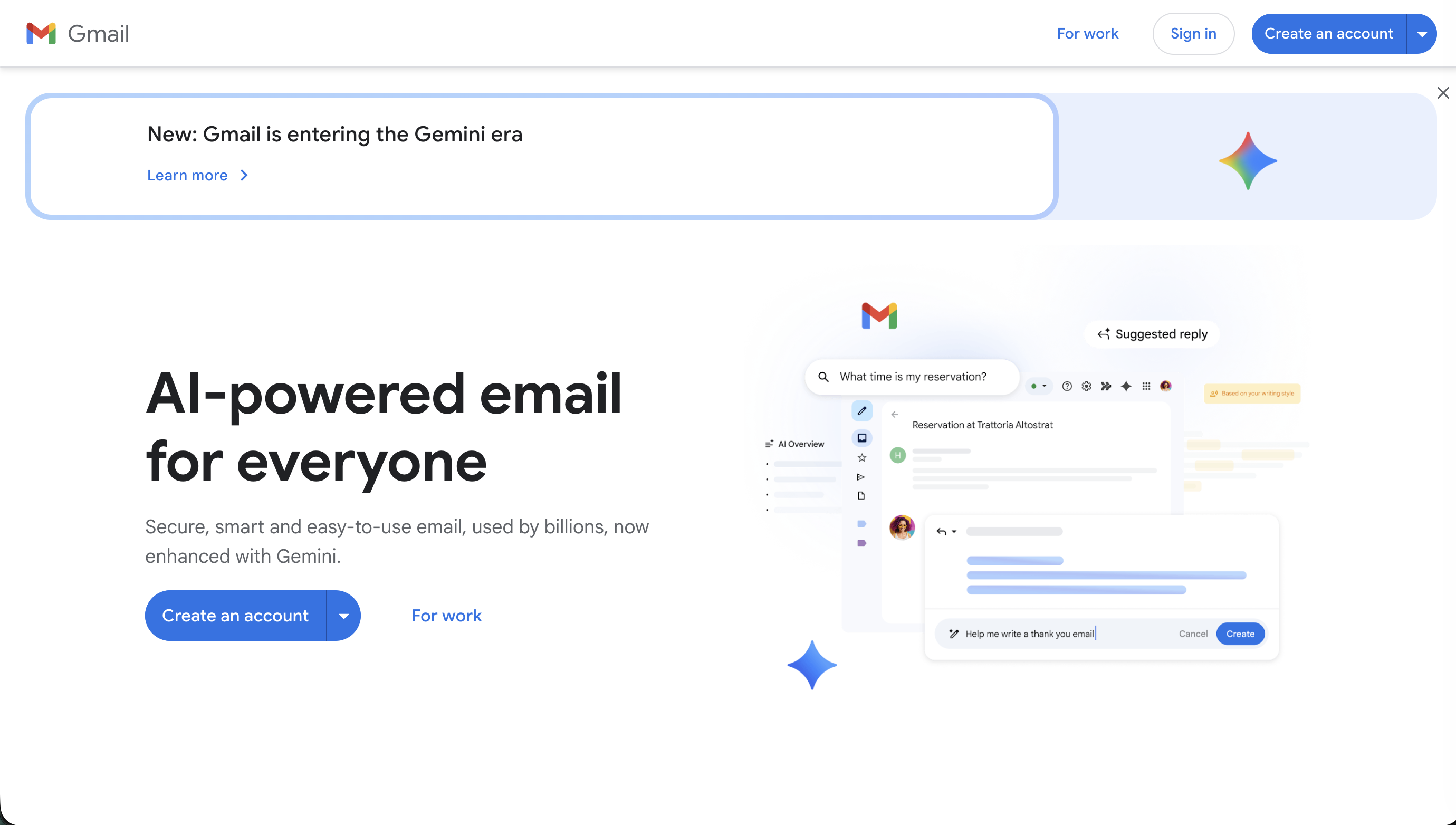
On Desktop or Browser
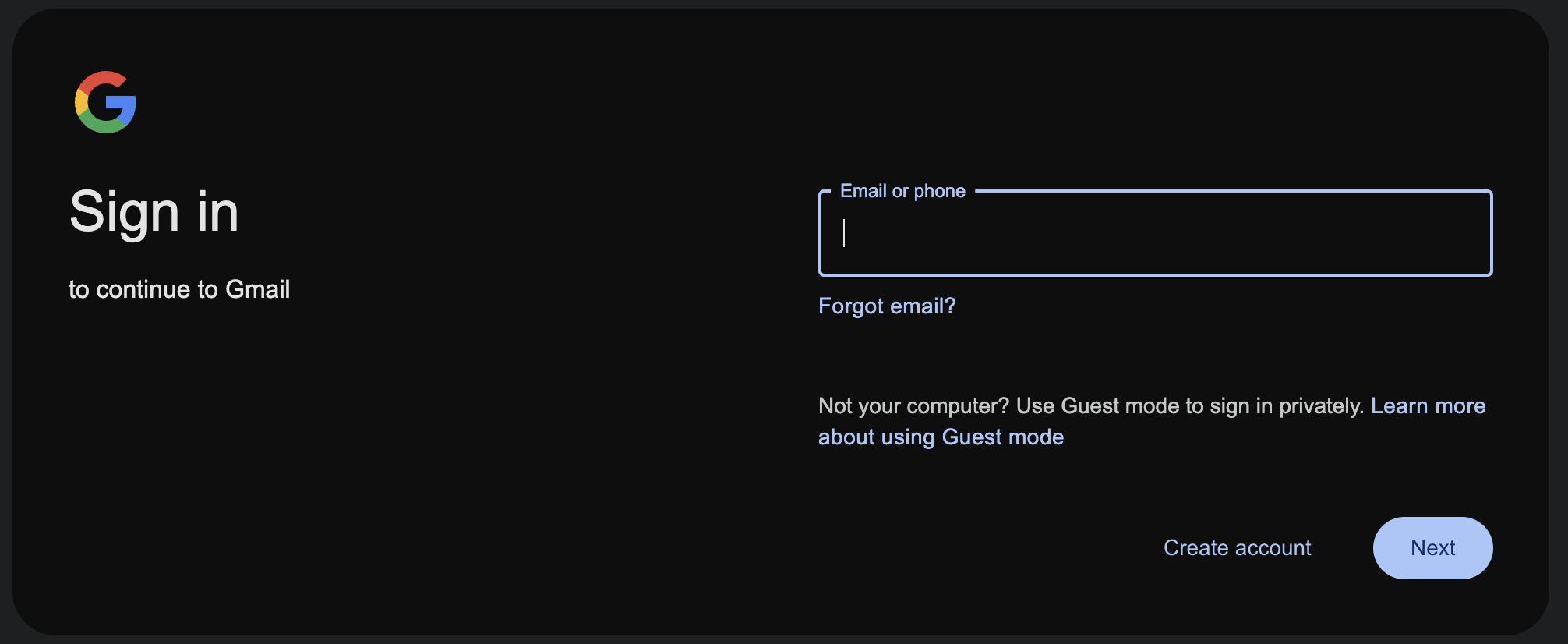
- Go to mail.google.com: Go to your browser (Chrome, Firefox, Edge, or Safari) and type in “mail.google.com” directly into the address bar. Never type the URL in a message from someone you don't know or on a website you don't recognize. Phishing pages may be designed to look like the Gmail sign-in page to trick you into providing your information.
- Enter your Gmail address: Enter your full email address (your name and @gmail.com). If you are using a Google Workspace for a work or school account, use the work email address. To proceed, click Next.
- Enter your password: Enter the password to log into your Gmail account. Please note that passwords are case sensitive, so be sure that the Caps Lock is not enabled. You can enable it to be auto filed if you are already using a password manager. To continue, click Next.
- Complete two-step verification if enabled: If you've enabled two-factor authentication, Google will either send a push message to your registered phone, or prompt you to enter a 6-digit code from your authenticator app. To get to the inbox, do this step:
- Your Gmail inbox opens:
- After logging in, Gmail will open at mail.google.com/mail/u/0/.
- You can bookmark this address for quicker access in the future.
- Click on your profile image in the upper right corner of Gmail to switch to another Google account or to add a new account.
Gmail Login Using Mobile Devices
On Android
- Open a browser or the Gmail app: Go to mail.google.com with Chrome or use the Gmail app on your Android smartphone. In your Android device app or in Chrome, select mail.google.com. If it is not installed, install it from the Google Play Store.
- Enter your Gmail address: Tap Add account or sign in; enter your complete Gmail email address, including @gmail.com. Tap Next to continue.
- Enter your password: Enter your Gmail password carefully. Passwords are case sensitive, be sure to not use the caps lock. Alternatively, you can save passwords or enable Google to autofill, if available. Tap Next.
- Finish two-step verification: Google will prompt you to enter a 6-digit code from your authenticator app, or the number sent to your registered Android device, if 2-Step Verification has been enabled. Accept or type in the code to continue.
- Your Gmail inbox opens: After confirmation, your Inbox will open automatically and sync emails, contacts and notifications in real-time.
On iPhone (iOS Devices)
- Open Gmail app or Safari browser: Go to mail.google.com on the Safari browser or download the Gmail app from the App Store. The Gmail app is the most seamless app on iOS.
- Enter your Gmail address: Tap "Sign in or Add account, then type your full Gmail address (including @gmail.com). Tap Next to continue.
- Enter your password: You need to enter your Gmail account password carefully. iCloud Keychain or Google Smart Lock can be used to automatically complete it. Tap Next.
- Complete verification step (if required): Verifying security may require Google to send a code to your phone number, email or trusted device. Enter the code/approve of the login request.
- Your Gmail inbox opens: Once you log in, your Gmail inbox will automatically open. Now you can send, receive, and manage your email directly from your iPhone.
Gmail Login on Different Browsers
Google Chrome
Chrome offers the best Gmail experience. If you're already signed in to Chrome with your Google Account, Gmail might open your inbox without prompting you for a login. The password manager in Chrome can store and autocomplete your passwords.
Mozilla Firefox
Gmail runs quite nicely in Firefox. Sign in to mail.google.com as you normally would. Firefox's password manager allows you to store the Gmail password for your future logins. If it does not sign in properly, disable the strict tracking protection of google.com for a short period of time.
Microsoft Edge
Edge supports Gmail at 100%. Your password will be saved, and you'll be able to sign in quicker with autofill. If you are presented with a blank or “frozen” sign-in screen, navigate to Settings > Privacy, search, and services > Clear browsing data. Empty your browser cache and cookies and refresh.
Safari on Mac and iPhone
Gmail performs well on Safari on Mac and iPhone. Use iCloud Keychain to enter your Google password without having to type it at any time. If Gmail is slow to open or appears incorrectly, follow these steps: Safari Settings
- Clear History
- Website Data
- Then reload mail.google.com.
Incognito and Private Browsing
When you log into Gmail in a new window, your Gmail session is independent. The window is closed and no history and cookies are saved; that's the end of the session. When logging into your Gmail account on a shared computer or borrowed computer, this is the suggested method.
Gmail Login Not Working: Common Problems and Fixes
Wrong or Forgotten Password
The password you entered is not accepted by Gmail, or you forgot your password. Avoid "trial and error." If you make too many failed login attempts, your account will be temporarily locked. If you want to correct this, please visit accounts.google.com/signin/recovery and follow the instructions to reset your password.
Forgot Your Gmail Address
You don't know which Gmail address is connected to your Google Account. Try Google's username recovery feature. It can locate your address based on your recovery phone number or recovery e-mail address.
Account Locked or Suspended
Too many failed logins, a violation of Google's terms of service, or suspicious activity has resulted in the lockout of your account. Visit the Google account recovery site to begin the recovery procedure.
Suspicious Login Blocked
Google has blocked access to this site because it was used on a new device, browser, or location that it doesn't know. This site is being blocked because Google is aware that it's being accessed on a new device, browser, location, or other device that hasn't been identified. Check account security settings to ensure that the logon is yours.
Two-Factor Authentication Code Not Working
The SMS verification code is not received, has expired before you enter it or the authenticator app is displaying an incorrect code due to the device clock being set incorrectly. Log in with an alternative password instead. You can find backup codes in your Google Account under Security, 2-Step Verification, and Backup Codes.
Gmail Page Not Loading
The login page does not appear, becomes stuck, or there is a connectivity problem. This is almost typically caused by the browser's corrupted cache or cookie data.
Browser fix: To fix the issue in the browser, go to Settings, then Privacy, then Clear browsing data. Clear cache and cookies and change your time range to all the time. Next, open a new private or incognito window and navigate to mail.google.com to test. If Gmail opens in private windows but not in your regular browser window, it is because of corrupted data in your regular Windows. Once it's clear, the issue will be solved.
Mobile fix: Go to the device settings, applications, Gmail, storage, and erase cache if you're using an iPhone or Android. Close and reopen the application. In case the issue persists, remove and reinstall the Gmail app from the Play Store/App Store.
Gmail Account Recovery: Step-by-Step Guide
If you can't get into your Gmail account at all, take the following steps, one by one. The more recovery information you have configured in advance, the quicker this process will be.
- Visit Google Account Recovery: Go to the browser address bar and type directly into accounts.google.com/signin/recovery. Click Next after entering your Gmail email address. NEVER begin recovery by clicking on a link in an e-mail message. Always type in the URL, never click on links in emails.
- Choose a recovery method: Google will display suggestions based on the information you have recovered in the past. These usually involve a code sent to your recover email, a code sent via SMS to your recovery telephone number, or a push notification to a gadget that you have signed in to. Take the one you have at this time.
- Verify your identity: Type the verification code that is sent to your specified recovery method. If you don't have your recovery email or phone number, Google will ask identity questions based on what it knows about you based on your account history, like previous passwords, names of people you email regularly, month and year you created your account, or previous passwords. Answer as accurately as possible.
- Create a new password: Once Google confirms your identity, you will be taken to the password reset screen. Set a new password that is at least 12 characters long and consists of letters, numbers, and symbols. Avoid using any other website password.
- Sign in with your new password: Go back to mail.google.com and log in with your Gmail address and your new password. If you are using a password manager, change your saved password for your Google Account as soon as possible.
- Update your recovery information: After getting back in, go to myaccount.google.com, then Security, then Ways we can verify it's you. Enter your recovery phone number and recovery email address. Look at the list of devices signed in and delete any devices you don't know. Final step: If you can't recover your account using any other method, you'll need to use Google's manual account recovery form, which is only available when you don't have access to your recovery email or phone. It asks you to provide comprehensive answers to your account history. Google checks your replies and determines if you are the page owner. If you have recovery information configured, they can be recovered easily, but if you don't, that is much more difficult.
How to Keep Your Gmail Account Secure in 2026
Your Gmail account is the key to the whole Google suite. The following steps are going to greatly minimize the risk of unauthorized access.
Enable Two-Step Verification
It's the one most effective security measure you can take. On myaccount.google.com, click Security, and then 2-Step Verification. If someone does manage to obtain your password, they can't log in without also approving the logon by your trusted phone.
Use Passkeys
Passkeys are a newer and more secure way to sign in without using a password. Instead, you can log in using your fingerprint, face unlock, or device PIN.
Passkeys are resistant to phishing and are quickly becoming the standard for secure logins.
Use a Strong and Unique Password
Include at least 12 characters, including uppercase letters, lowercase letters, numbers, and symbols. Do not have the same password for more than one account. This is easily done with a password manager like Bitwarden, 1Password, or Google's Password Manager.
Recognize Phishing Attempts
Google will never ask for a password or sign-in link in an e-mail. If you do get such an e-mail message, do not click on any links.
Go to the official Google account website in a new browser tab to review your account status instead of using links from emails.
Also watch for:
- Fake login pages
- Urgent “account suspended” messages
- Unknown attachments
Review Devices Signed Into Your Account
On myaccount.google.com, select Security, and then Your devices. This will log out to the device and user if an unknown device or location is detected. If you discover any unauthorized access, change your password right away.
Audit Third-Party App Access
A lot of apps and browser extensions ask for access to your Gmail information. Go to myaccount.google.com, then Security, and then Third-party apps with account access and delete unnecessary access. Throw out items that are no longer needed or unfamiliar.
Set Up a Recovery Email and Phone Number
If you lose a password without recovery information, then your account may be permanently locked. Go to myaccount.google.com and then Security and the Ways we can verify it's you. Have a recovery e-mail address that you check regularly.
Run Google Security Checkup
Google provides a built-in Security Checkup tool. Use it regularly to review:
- Devices
- Security settings
- Login activity
It helps you quickly detect and fix any security issues.
Gmail IMAP and SMTP Settings 2026
You can use these settings to sync your Gmail account with other external email clients.
IMAP Server: imap.gmail.com Port: 993 Encryption: SSL/TLS
SMTP Server: smtp.gmail.com Port: 587 Encryption: STARTTLS
SMTP Alternative: Port 465 Encryption: SSL/TLS
POP3 Server: pop.gmail.com Port: 995 Encryption: SSL/TLS
Note for users of two-step verification: If you have two-step verification set up in your Google Account, you'll need your new two-step verification code instead of your regular Gmail password with third-party mail clients. An app password will be needed. Visit myaccount.google.com, select Security, and then App passwords. Make one for your email client and enter that same 16-character code in the settings of your email client as your password, rather than your obvious Gmail password.
Conclusion
The Gmail login page at mail.google.com is the official secure logon page to sign in to your Google account and be able to use all the related Google services, such as Google Drive, YouTube, Google Photos, etc., from one Google.com account. The user only must log in with their email and password and verify if necessary to reach their mailbox on any device. Always use the correct URL, and take extra precautions to secure your account, such as using the two-step verification process.
Frequently Asked Questions
What is the Gmail login page URL?
The official login page for Gmail is mail.google.com. The sign-in screen can also be accessed via accounts.google.com, which authenticates Google Accounts for all Google services. Never enter any details into a field in a browser when the URL isn't already in the browser. Never trust any details in an input field in a browser if the URL isn't already in the browser, and to make sure the URL ends with google.com. Often the phishing sites are made with a domain name that is like the actual address.
Gmail login is not working. What should I do?
Clear your browser cache and cookies, beginning in Settings, Privacy, and then Clear browsing data. Click on the word "All time." Next, attempt to log in using a private window or incognito window. If Gmail is working in a private window but not in your normal window, it is due to corrupted stored data, and clearing out the data will solve the problem. On mobile, do the following: From the Settings menu, clear the Gmail app cache by choosing Apps, Gmail, Storage, and then Clear Cache. If you don't remember your password, visit accounts.google.com/signin/recovery.
Is Gmail login the same as Google Account login?
Yes, it is the same. Your Gmail address and password are your Google Account credentials. A separate login for Gmail is not there. Using the same email and password, you have access to Gmail, Google Drive, Google Photos, YouTube, Google Pay, Google Maps, Google Calendar, and all other Google products. Logging in to any one of Google's services synchronizes your login across all services.
How do I recover my Gmail account?
Visit accounts.google.com/signin/recovery, enter your Gmail address, and follow the steps to verify your account. Google will attempt to authenticate you with your recovery phone number, recovery email, or questions regarding your account history. After you've been identified, you can change your password and have access restored.
Can I use Gmail without the app on iPhone or Android?
Yes. On the phone, open Chrome or Safari, and type in mail.google.com. The mobile browser version of Gmail is complete and will support most of the same features as the app such as composing, replying to email, labeling, searching, etc. To get an app-like experience, save it to your home screen. For iPhone, click on the share icon and choose Add to Home Screen. To add to the home screen on Android, go to the browser menu and click Add to Home Screen.
How do I stay logged into Gmail across browser sessions?
Before logging in to Gmail, make sure to select the "Stay signed in" checkbox on the sign-in screen and then click the Next button. This will save you the hassle of entering your password again after closing and opening your browser. Only use this on your own device and in your own trust. If using a shared computer, work device or public computer, leave this unchecked and sign out at the end of each session.
How do I sign in to Gmail on a different browser?
Gmail is compatible with all the modern browsers such as Chrome, Firefox, Edge, and Safari. Open any of these, click on mail.google.com, and enter your email address and password. The browsers have individual login sessions. If you're signed in to Gmail for Chrome, you will not be signed in for Firefox or Edge.
Why is Google asking me to verify my identity when I log in?
Google automatically scans for suspicious activity if it detects that a new or unfamiliar device is signing in, that the location is different from your regular logins, or that the access pattern is different from how you've signed in. This is a safe feature and should not be considered a mistake. Verify yourself, as Google tells you to do. If you didn't start the sign-in process, refuse it right away and reset your password on accounts.google.com/signin/recovery.