

 +44 1625708989
Original Articles: 2025 Vol: 17 Issue: 1
Acetic Anhydride Facilitated Ipso Iodination of Aryl Boronic Acids: Mild and Rapid Synthesis of Aryl Iodide
Sandeep V Shinde1*, Rajesh H Tale1, Digambar B Kadam2
1 Department of Chemical Sciences, Swami Ramanand Teerth Marathwada University, Nanded, Maharashtra, India
2 Department of Chemistry, Indira Gandhi Senior College, Nanded, Maharashtra, India
*Corresponding Author:
- Sandeep V Shinde
Department of Chemical Sciences, Swami Ramanand Teerth Marathwada University, Nanded, Maharashtra, India
Received: 18-Dec-2024, Manuscript No. JOCPR-25-155751; Editor assigned: 22-Dec-2024, PreQC No. JOCPR-25-155751 (PQ); Reviewed: 06-Jan-2025, QC No. JOCPR-25-155751; Revised: 19-May-2025, Manuscript No. JOCPR-25-155751 (R); Published: 26-May-2025, DOI:10.37532/0975-7384.2025.17(1).244.
Citation: © 2025 Shinde SV, et al. This is an open-access article distributed under the terms of the Creative Commons Attribution License, which permits unrestricted use, distribution, and reproduction in any medium, provided the original author and source are credited.
Abstract
Iodoarene are considered to be versatile electrophilic partner in c-c bond forming cross-coupling reaction. They are also important building block for the generation of highly versatile and envmentally benign class of organic compounds called hypervalent iodine compounds. For instance, iodoarenes can be readily converted to Diacetoxy Iodobenze (DIB), IBX and dichloroiodo benzene under oxidising conditions. In view of the forgoing discussion, there is always ample scope for the development of new and improved synthetic methods for the iodoarenes synthesis. Being electron defficient, the necessary requirement for the ipso substitution of organoborn compound (boronic esters, and boronic acids) is that they must be initially activated by some external nucleophile so as to enable them to have electrophilic substitution redily. In our serendipetious discovery during course of our previous resach, we had ascertained that the acetic anhydride so added unintensionally must have played the role of activator for iodine to give iodoacatate and caetyl iodide. Thus both, Acetae ion (CH3COO-) and Iodide (I-) ion so generated must have higly activated boronic acid. In the present work, along this line, we envisage that using hitherto untested ecofriendly and economical viable iodinating agent for that is iodine-acetic anhydride couple for ipso iodination of boronic acid could lead to viable approach for the synthesis of iodoarenes. Herein, we report that that our above hypothesis indeed worked well as the structurally diverse aryl boronic acids could be efficiently converted into corresponding aryl iodides using I2/Acetic anhydride as novel iodinating agent. Detail investigation of various parameters such as temperature, amount of iodine to acetic anhydride ratio, solvents etcas to find out the optimal conditions was carried out. The wide variouty of boronic acids such as electron rich, electron defficient and even highly hindered ortho-substituted found to have successfully participtated in this iodination process. Taken together, we have developed the simple and convenient and economical viable approach for the facile synthesis of valuable iodoarenes while avoiding the use of any mrtal catalyst or hazardous reagent.
Keywords
Ipso substituting; Convenient; Metal catalyst-free; Improve protocol; Economically viable
Introduction
Iodoarene are proved to be importent precursors as the eleectrophilic partners in Suzki and related metal mediate cross- coupling reaction. In addition, iodoarene can be easily oxidise leading to several hypervalent iodine reagent, and they useful as radiolabelling and diagnostic agents. As such, intrinsic innertness of iodine and iodocompound, as against other aryil halide, formation C-I bond is difficult process. Oxidation and ipso-substituon of arene diazonium salt are the most common method for the synthesis of titled compound. Unfortunately, these methods are not devoid of drawback and require that the novel protocols for the iodoarene ought to be developed. Metal catalysed (copper catalyst and related reagents) direct iodination of arenes has recently been reported as powerful tool for the aryl iodidearene synthesis by the group of Buchwaid at MIT USA.
Recently, conversion of boronic acids via deborylation to various substituted arene has been emerged as powerful synthetic approach [1]. As a results, based on this aaproach, synthesis of structurally divere arylazides, phenols, arylsulfones, aryl halides, nitroarenes and amines have been reported. Reported metal free ipsdo iodinastion of artylboronic acid using CTAB/I2. As further advancement, the N-methylmorpholinium Iodide (NIMI) act as highly efficient iodinating agent for ipso iodination of boronic acids in the presence of copper catalyst has also been reported by same group [2].
Materials And Methods
All the solvent was purchased from SD Fine Chemical Ltd. Boronic acids were purchased from Sigma Aldrich Chem. Ltd.
Synthesis of aryl iodides
In 25 ml round bottomed flask containing with I2 (2 equiv.) and acetic anhydride (3.0 equiv.) in CH3CN (10 ml) and the
mixture was for a while. Then, to this mixture arylboronic acid was added and the mixture refuxe for 1 h. The progress
of reaction was monitored by TLC. After 1 h, treatment of the mixture with dilute sodium thiosulphate solution, it was extracted with ethyl acetate. Organic layer was washed successively with water and then brine. The solvent was removed
under vaccu and resulting crude product subjected to colu column chromatography (pet ether: ethyl acetate, 9:1) to yield pure product.
Representative spectral data
(4-iodophenyl)-isopropylsulfane
1HNMR (CDCl3, 400 MHz): δ 1.24 (d, 6H), 3.31 (septet, 1H), 7.000 (dt, 2H), 7.55 (d), 2H).
13CNMR (CDCl3, 400 MHz): δ 25, 38, 92, 135, 137, 197
Results And Discussion
In view of the high synthetic utility of iodoarene as described in the preceding section, any advancement in the synthetic protocol over previously reported methods is always acclaimed by scientific community [3]. Thus the development of further milder and efficient and economical protocol for the synthesis of iodoarene is highly desired. In the present work, we report the novel methods for the metal free ipso-iodinsation of diveres boronic acid using molecular iodine and acetic anhydride (I2/Ac2O) couple as iodinating agent under extrenmely mild conditions. During
the course of our previous work, in one of our attempts, we had obtained very striking result that the rate of reaction enhanced so dramatically that it was unparallel to all other results. Delighted by this finding, we were curious about the cause of such dramatic enhancement. Therefore, we thought it worthwile to ascertain as to what could have added to reaction mixture resulting into this unexpected effect of yield of the reaction. After analysing all the possibilities, we could speculate that that the syringe used for acetic anhydride for another reaction happend to be used to add morpholine in the of the optimisation experiment. To check wheat, he indeed this to be the case, we intensionally carried out the experiment in which acetic anhydride (1 to 2 equiv.) was used aim combination with morpholine and I2. We were delighted to see that in all the experiment, more or less we got either similar or even better results to that of seridipitious result [4,5]. Thus it was confirmed that indeed it was none other than the accidentally added acetic anhydride causing to reach to completion so rapidly that this result found to be altogether different from all other optimisation experiments. This serendipitious discovery prompted us to develop more improve method for the synthesis of aryl iodides.
As to exactly what amount of acetic anhydride is optimal to get the highet possible yield, it was essential to undertake the optimisation study. Thus, we considered the model reaction involving 4-ethylphenyl boronic acid as a substarte. The various parameter such as use of different solvents, temperature, amount of iodine and acetic anhydride was carried out, Figure 2. After performing series of experiment, the best recation conditions. Among all the solvent screened, the acetonitrile was found to be the best solvent. Also, DCM and methanol were found to othe suitable solvent as both reactions gave high yield of the products. After performing series of experiments, we found that the boroni acid 1 equiv, I2 2.0 equi., acetic anhydride 3.0 equiv in acetontile under refluxe for 1 h were best reaction condtions for the present study (Figure 1 and Table 1).
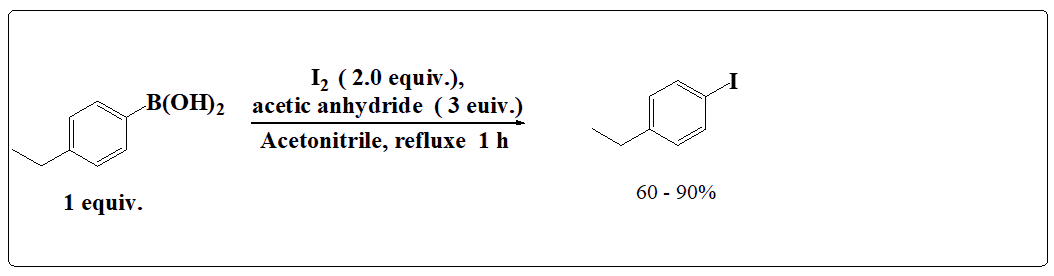
Figure 1: Calibration curve of ciprofloxacin.
|
Sr. no |
Acetic sanhydride |
I2 |
Yield |
|
(Equiv.) |
(Equiv.) |
(%) |
|
|
1 |
None |
1 |
None |
|
2 |
0.2 |
1 |
25 |
|
3 |
0.5 |
1 |
37 |
|
4 |
1 |
1 |
42 |
|
5 |
2 |
2 |
71 |
|
6 |
2 |
3 |
78 |
Table 1: Recation parameter optimization.
Having established the optimised reaction conditions, next in order to fine out the scope and generality of the present approach, the wide variety of boronic acids such as ortho, meta and para substituted aryl boronic acids and some heteroarylboronic acids were subjected to ipso substitution under present reaction conditions [6].
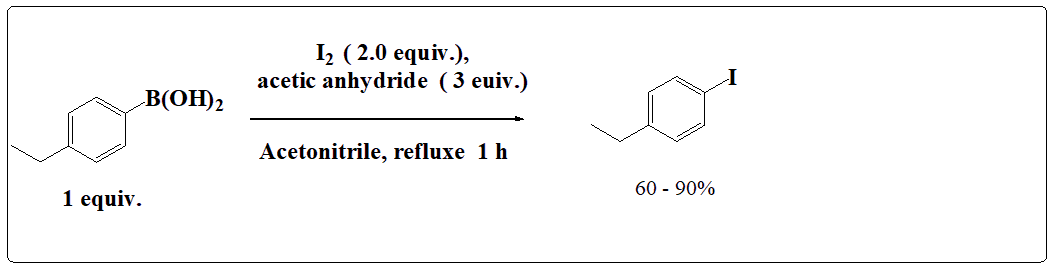
Figure 2: Calibration curve of ciprofloxacin.
Substrate scope
The results of the substare screening is shown in Table 1. It was found that wide variety of boronic acids were found to be suitable under these conditions corresponding aryliodides in good yields. In contrast to phenylboronic acid, electron rich subnstrates reacted efficiently thus proving iodoarene product in high yield [7]. The arylboronic acids bearing alkyl, alkyloxy (Table 2, entries 2, 3, 4, 10), alkyl thio (Table 2, entry 5 and 6), carbonyl (Table 2, entry 7), alkoxy carbonyl (Table 2, entry 8 and 9), halides (Table 2, entries 10 and 11), and methane sulfonyl (Table 2, entry 13) etc. participated successfully in the ipso iodination process.
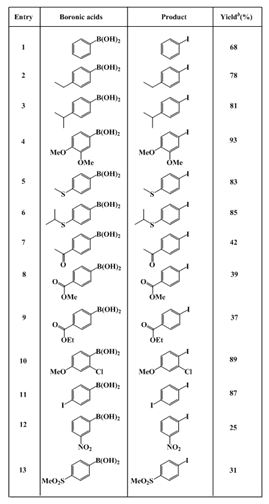
Table 2: Scope of boronic acids in acetic anhydride mediated ipso iodination[a].
Unfortunately, electron deficient boronic acid however lead to iodoarenes in moderate yield. Notably, sterically hindered substrtae such as 2-chloro-4-methoxyphenylboronic acid gave corresponidng iodoarene in excellent yield
thereby proving high reactivity of hinderd but electron rich boronic acids using this approach. We also screened several alkylboronic acids, for instance indalyl boronic acids, but unfortumnately, they gave inferior results under present conditions (results not shown). Thus, we speculate that the presen iodinating agent I2/acetic anhydride might not be
effective to activate alkylboronic acids towards the ipso iodination process.
Mechanistic pathways
After detail invetsgation of various reaction parameters such actic anhydride to I2 ratio, solvents and temperatutre, we though it worthwhile to propose the plausible mechanistic pathyay(s) for the present ipso iodination process. As
activation of boroic acids in order to have ipso attack on boronic group is the mandatory requirement for the success of this process. The negatively charge boron species is then must add electophilic partner to itself leading to deborylation
product. As in the absence of acetic anhydride the reaction did not proceed (Table 2, entry 1) imply that boronic acid
might not have activated and hence iodine [8]. Thus the role of acetic anhydride is to first generate two ionic species folloiwng reaction with iodine viz. iodoacetate (AcO-I+) and acetyliodine (Ac+I-). Thus the iodoacetae can serve the
puspose of both as activater for boronic acids as well source electrophilic iodonium ion I+.
Based on this we propose the following pathaws for the presnt reaction. The iodine reacts with acetic anhydride to give iodonim acetate and acetyl iodide. The Lewsi acid–base type interaction of boronic acid and acetae ion result into ionic species (borontae type anion) [9]. The ipso attack by I+ on boronate lead to the formation of iodoarene products and
actic anhydride is regenetaed. Regenertaion of acetic anhdrid could be established by the fact that the reaction can is proceeded even using catalytic amount of acetic anhydride (Figure 3).
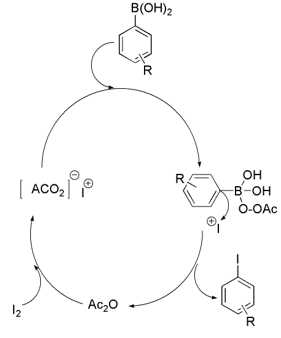
Figure 3: Palusible mecanism for ipso iodination.
Conclusion
Organoboron compounds are highly versatile and green reagents. In the present work, we grab this unique character of
organoboron compounds, particularly, aryl boronic acid by judicious choice of novel iodinating agent such as I2/acetic anhydride to develop novel ipso iodination protocols. It worth mentioning here that in the present work, we have first time demonstrated the concomitant use of molecular iodine as iodinating agent and small organic molecules as activators. In conclusion, the use of readily accessible and inexpensive reagents, mild conditions, high yields and operational simplicity make the present protocol as an attractive alternative.
Acknowledgement
S.Shinde thanks the Principal, PN College for providing the necessary facilities for this research work.
References
- Chow WK, et al. Advances. 2013;3(12):12518.
- Ishiyama T, et al. J Org Chem. 1995;60(22):7508.
- Thomson ALS, et al. Synthesis. 2005;547:1-20.
- Molander GA, et al. J Org Chem. 2013;78(20):6427-6436.
- Molander GA, et al. J Org Chem. 2012;77(19):8678-8686.
- Tang W, et al. Org Lett. 2011;13(6):1366-1369.
[Crossref] [Google Scholar] [PubMed]
- Dundik S, et al. J Am Chem Soc. 2012;134(31):10693-10702.
- Takagi J, et al. Synlett. 2002;1880(12):1880-1885.
- Takagi J, et al. J Am Chem Soc. 2002;124(16):8001-8005.